Opendoor - Buy and Sell Homes
- 4.5
- Rating
- 500.00K
- Installs
- Free
- Price

 Analysis by App-foxy
Buying or selling a home is one of those tasks that can quickly become a second job. Opendoor - Buy and Sell Homes takes a more direct approach by putting the first steps of that process on a phone, rather than making you begin with scattered searches, calls, and appointments. I found it most useful as a starting point for homeowners who want a quick sense of their options and buyers who prefer browsing homes in a focused app.
The app belongs to the House & Home category and comes from Opendoor Labs, LLC. It is free to install, rated for Everyone, and has built a sizeable audience, with more than half a million installs and an average score of 4.6 from roughly 3,400 ratings. Those figures suggest that it has become a familiar tool for people exploring a move, although popularity alone does not remove the need to inspect a property and understand the financial details carefully.
How Opendoor fits into a real home search today
My first impression is that this is not trying to replace every part of a real-estate transaction. It is better understood as a convenient front door: you can explore available homes, begin thinking about selling, and organize your next move from one place. That is a meaningful difference from the usual process, where a buyer may use one service for listings, another for mortgage estimates, and a collection of messages or spreadsheets for the rest.
You May Also Like

 Blood Strike: 2.5 Anniversary
Blood Strike’s Loadouts Turn Every Drop Into a Tactical Gamble
A close look at Blood Strike’s custom loadouts: how fast access to signature weapons reshapes its battle royale rhythm, rewards preparation, and narrows the gap between fights.

 Pandora - Music & Podcasts
Pandora’s Music Is Easy to Start, but Harder to Recover
Pandora’s strength is its low-effort path from a seed to a station. Its weak spot is how much confidence it asks you to place in connection, setup, and quiet recovery.

 8 Ball Pool
 Is Built on Rivalries, Rematches, and Routine
A close look at the rivalries, rematches, shared routines, and unanswered safety questions that turn a quick pool match into a persistent mobile community.

 Samsung Music
’s Quiet Strength Is Playing What You Already Own
Its reach comes less from spectacle than from dependable access to a personal library. That simplicity is both the app’s strongest retention engine and its ceiling.

 AccuWeather: Weather Radar
AccuWeather Review: A Quick, Clear Forecast for Everyday Decisions
For everyday plans, the best forecast is the one you can understand quickly. AccuWeather makes rain timing, radar, and local conditions easy to act on, with a few trade-offs.

 Hill Climb Racing
Why Hill Climb Racing Still Turns Crashes Into One More Run
A tiny car, a bumpy hill and one more upgrade: Hill Climb Racing keeps resurfacing because its simple chaos makes every near-miss feel personal.
More From Our News Desk



The store summary, “Buy and sell in one go,” captures the central idea without explaining the practical appeal. The useful part is the connection between the two sides of moving. If I were already living in one property while looking for another, I would not have to treat selling and buying as completely separate projects. That does not make the transaction simple, but it does make the app relevant to a more realistic moving scenario.
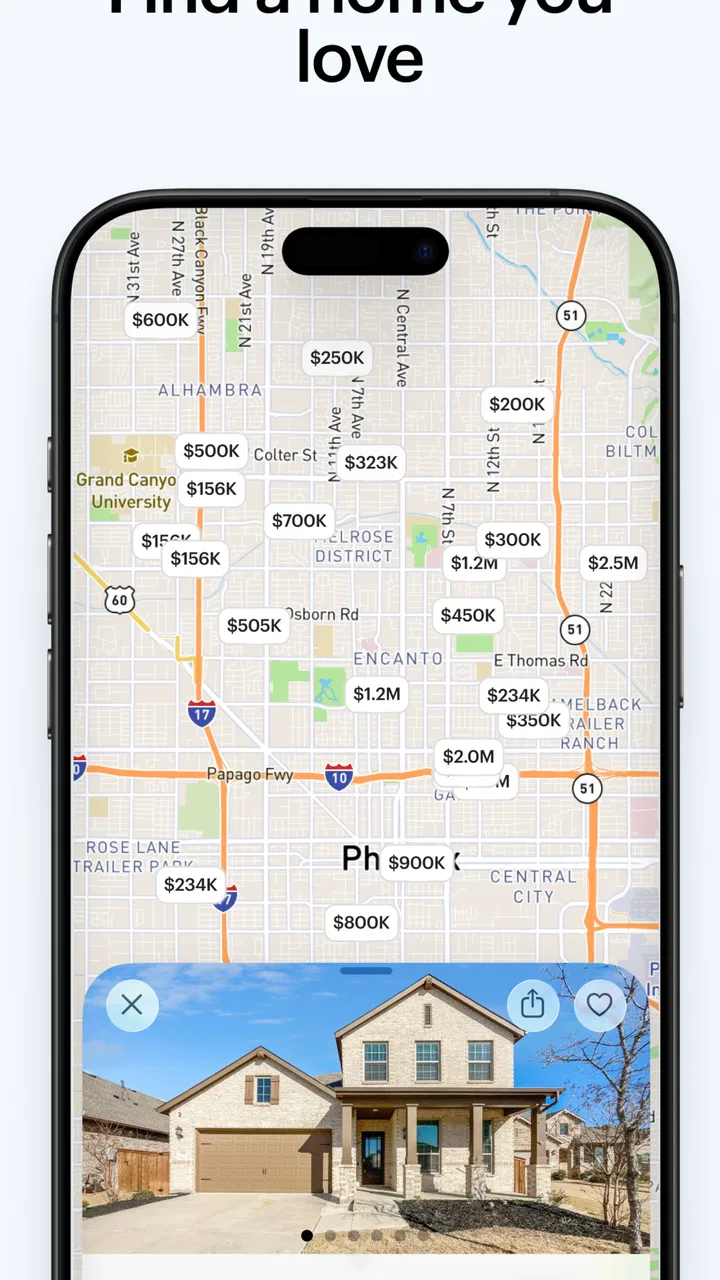
For buyers, the app is most helpful during the discovery stage. I can browse homes without immediately committing to a conversation with an agent, compare the general feel of different properties, and save promising options for a later review. That makes it suitable for someone who is still deciding whether to move, narrowing down neighborhoods, or trying to understand what kind of home fits a budget.
For sellers, the appeal is different. A digital-first process can feel less intimidating than making several calls before knowing whether selling is even practical. I would use the app to begin the conversation and gather an initial direction, not as a substitute for reading every offer and asking questions about the final amount I would receive.
A practical moving-day scenario
Imagine a family that has found a new job in another area and needs to coordinate a move while still living in its current home. The parents could use the app to look at possible purchases, then investigate the selling side without switching between unrelated services. In that situation, the main advantage is not simply convenience. It is the ability to keep the two decisions mentally connected: what they might buy, when they might sell, and whether the timing makes sense.
That workflow also exposes an important limitation. A phone app can help organize the beginning of a move, but it cannot remove the uncertainty around inspections, financing, negotiations, local conditions, or the emotional pressure of leaving a home. I would still keep a separate checklist for documents, deadlines, and questions. Treating the app as the entire transaction would be too optimistic.
What the current version tells me about the product
The current version is 210.2.0, and the app has been available since October 19, 2016. That long presence matters because a home-buying tool needs to feel established enough for people to return to it during a process that can take time. I also see the current version as evidence of ongoing maintenance rather than a frozen listing that has been left untouched.
At the same time, a version number by itself does not tell me that every part of the experience has changed dramatically. I would separate the visible promise from the actual day-to-day value: the app’s role remains focused on connecting buying and selling, while updates are expected to refine that journey rather than turn it into a completely different product.
It runs on Android 7.0 and later, which keeps it accessible on many older devices. That is useful for households that do not upgrade phones frequently, especially when several family members need to review listings or messages. Owners of older hardware should still expect the experience to depend on their device’s performance and available storage, but the minimum requirement is not especially demanding.
How the app changes the first steps of selling
The biggest change for a potential seller is psychological. Instead of beginning with the assumption that a sale requires a long chain of appointments, I can begin with a guided digital interaction. That lower barrier is valuable for people who are curious but not yet ready to list publicly or invite several professionals into their home.
There is a trade-off, though. A fast first step can make the process feel more certain than it really is. I would avoid treating an early estimate or initial conversation as the final answer. A home’s condition, location, timing, and transaction details can affect the result, so the sensible workflow is to use the app to begin, then verify the important numbers and conditions before making a decision.
One useful habit is to prepare information before starting. I would gather details about the property, note recent improvements, and write down any questions about timing or costs. Doing that first makes the digital process more productive and reduces the risk of accepting a convenient-looking path without understanding what follows.
What buyers gain, and where browsing stops being enough
As a buyer, I like the ability to begin privately. Early research is often messy: I may not know which neighborhoods are realistic, how much space I need, or whether a particular feature is worth prioritizing. An app makes it easier to revisit those questions without arranging a formal meeting for every change of mind.
However, browsing is only the beginning. A listing can help me identify a property worth investigating, but it cannot replace seeing the home, checking its condition, and understanding the surrounding area. Photos and descriptions are useful filters, not proof that a house is right for me. I would use Opendoor to reduce the number of homes I need to consider, then rely on direct inspection and professional advice for the serious decision.
This is also where the app may not suit everyone. Buyers who want a highly personal relationship with a local agent from the first conversation may prefer a traditional real-estate service. An agent can provide context about a neighborhood and help interpret complicated situations in a way an app cannot fully reproduce. Opendoor is a better match for people who value speed, self-service browsing, and a more centralized starting point.
Small workflow choices that make it more useful
I would not use the app by casually scrolling whenever I have a spare minute. A better approach is to create a short decision routine. First, separate homes that genuinely fit from homes that are merely attractive. Then compare the practical details that affect daily life, such as location, layout, and likely work needed. Finally, keep a short list of questions for the next step instead of relying on memory.
For sellers, I would take screenshots or notes of important stages in the process for my own records, while remembering that the app itself is not a replacement for formal documents. For buyers, I would avoid making an offer simply because a listing feels urgent. The app can make discovery feel fast, but my financial review should move at a pace that matches the size of the decision.
A second useful tactic is to use the buying and selling sides together without assuming they must happen simultaneously. I might explore purchase options first to understand the target, then review selling possibilities, or do the reverse if timing is the main concern. This makes the app more flexible for people who are planning months ahead rather than moving immediately.
A third insight is that the app is especially valuable as a comparison tool. Even if I ultimately choose a conventional agent or another route, the early research can help me ask sharper questions. I can compare the convenience of a digital-first process with the personal guidance, negotiation style, and local knowledge offered by alternatives. In that role, Opendoor does not need to win the entire transaction to be useful.
Where traditional alternatives still have the edge
The usual alternative is a local real-estate agent who manages much of the communication and provides advice throughout the transaction. That route may be preferable when the property is unusual, the negotiation is complicated, or I need someone who knows the local market in depth. It can also feel more reassuring for a first-time buyer or seller who wants a human explanation at every stage.
Another alternative is using separate listing and research tools while handling the selling process independently. That can offer broader flexibility, but it also creates more work. I may need to track contacts, compare information from different places, and remember which details belong to which property. Opendoor’s advantage is the attempt to make buying and selling feel like parts of one journey rather than unrelated tasks.
The trade-off is control versus simplicity. A self-directed approach can give me more freedom to choose advisers, compare routes, and negotiate each element. A more centralized app experience can reduce friction, but I need to pay close attention to the terms and make sure convenience is not replacing careful comparison.
What existing users should expect from the product’s evolution
Someone who has used the app before will likely notice its continuing development through the current version rather than through a completely new identity. The important expectation is steady refinement of the buying-and-selling journey. I would look for smoother browsing, clearer progress through seller steps, and easier movement between researching a purchase and considering a sale.
That does not mean every update will change the way a person moves. Existing users should still approach each new release with practical expectations: improvements may make familiar actions easier, but the underlying realities of buying or selling a home remain. A better interface cannot eliminate paperwork, financial checks, property inspections, or the need to make a careful decision.
If I were returning to the app after a long break, I would revisit saved homes and seller information rather than assuming everything still reflects my current situation. Housing needs change quickly, and a list created during an earlier search may no longer match my budget, commute, or preferred area. The app can support continuity, but I still need to refresh my own criteria.
Remaining friction before making a serious decision
The most important gap is the distance between a convenient digital beginning and a legally and financially significant transaction. People may want a quick answer, but a home deserves slower verification. I would want clear explanations of the next steps, the responsibilities involved, and the figures that matter before moving forward.
Another point of friction is emotional context. Selling a home is not only a calculation, and buying one is not only a search. A human adviser can sometimes notice hesitation, explain a compromise, or help a family agree on priorities. The app is strongest when I already know what I want to investigate; it is less powerful when the challenge is uncertainty between several people.
There is also a risk of narrowing my attention too early. A clean digital search can encourage me to focus on what appears in front of me and overlook homes, neighborhoods, or approaches that require more traditional research. I would treat the app as one important route, not as the only source of truth.
Who should use Opendoor, and who should skip it
I would recommend it to a homeowner who wants a low-pressure way to begin exploring a sale, a buyer who prefers self-guided browsing, or a person coordinating a move and wanting buying and selling considered together. It is also a sensible option for someone who appreciates handling early steps from a phone and wants to reduce the number of disconnected tools involved.
I would be more cautious about recommending it to someone who expects a personal adviser to manage every detail, needs highly specialized local guidance, or is uncomfortable reviewing transaction information independently. People with a complicated property situation should compare the app’s route with advice from appropriate professionals before committing to it.
The free price makes experimentation easy, and the Everyone rating means it is presented as suitable for a broad audience. Still, “free” should be understood as the cost of accessing the app, not as a promise that the broader home transaction has no expenses. I would judge the service by the clarity and suitability of the complete process, not only by the absence of an installation charge.
What I would watch before relying on it
If I were planning to use the app for an actual move, I would watch how clearly it explains transitions between browsing, selling, and the more formal stages of a transaction. I would also pay attention to whether the information I need is easy to find when a decision becomes urgent. In real estate, clarity at the right moment matters more than a visually attractive starting screen.
I would also watch how well the experience supports returning users. A home search is rarely completed in one sitting, so saved choices, previous conversations, and changing priorities need to remain manageable. The app’s long history and current version suggest an actively maintained product, but my personal test would be whether it reduces mental clutter rather than adding another inbox to monitor.
Finally, I would compare the convenience against the alternatives at the point where money and commitment enter the picture. If Opendoor helps me understand my options and move confidently to the next step, it has done something valuable. If I still need a local expert for the difficult parts, that is not necessarily a failure; it simply shows where a digital-first tool ends and human guidance begins.
My final take after using it
Opendoor - Buy and Sell Homes is a focused House & Home app for making the early stages of a move feel more connected. I like its attempt to bring buying and selling into one experience, especially for people who want to investigate privately before arranging a larger conversation. Its free access, broad device compatibility, and established presence make it easy to try.
My recommendation comes with a clear condition: use it as a practical starting point, not as a substitute for careful real-estate judgment. Browse thoughtfully, prepare your questions, verify important details, and bring in human expertise when the situation becomes complex. Used that way, the app can save time and give structure to a stressful process without pretending that a phone can solve every part of moving home.
FAQs for Opendoor - Buy and Sell Homes
01What is Opendoor and how does it work?
Opendoor is a real estate platform designed to simplify the process of buying and selling homes. Users can quickly request a cash offer on their home, allowing for a fast and hassle-free sale. For buyers, the platform offers a seamless browsing experience with detailed listings, virtual tours, and the ability to schedule visits easily.
02Is Opendoor available in my area?
Opendoor is available in numerous locations across the United States, including major cities and growing metropolitan areas. To check if it's available in your area, visit the Opendoor website or app, enter your ZIP code, and explore the current market presence and service availability.
03How does Opendoor determine the value of my home?
Opendoor uses a combination of local market data, recent sales, and proprietary algorithms to assess the value of your home. This ensures that the offers are competitive and reflect current market conditions. The process is designed to be transparent, providing homeowners with a fair and accurate valuation.
04Are there any fees associated with using Opendoor?
Yes, while Opendoor aims to streamline the buying and selling process, there are service fees involved. These fees are typically similar to traditional real estate commissions, covering the cost of convenience and the services provided. It's important to review the fee structure on the Opendoor platform before proceeding.
05What are the benefits of using Opendoor compared to traditional real estate methods?
Opendoor offers a faster, more convenient alternative to traditional real estate transactions. Sellers benefit from receiving quick cash offers without the need for showings or negotiations. Buyers enjoy easy access to property listings with virtual tours and flexible visit scheduling, making the entire process more efficient and user-friendly.
Pros
- User-friendly interface for easy navigation.
- Quick access to property details and photos.
- Seamless scheduling of home tours.
- Transparent pricing with no hidden fees.
- 24/7 customer support available.
Cons
- Limited availability in certain regions.
- Requires a stable internet connection.
- Some features need account registration.
- Occasional app crashes reported.
- Limited customization of search filters.

Opendoor - Buy and Sell Homes
Gallery